Good to see the FDA moving on this as we're starting to hear of afib patients with mechanical heart valves getting Pradaxa. Here is the FDA announcement... ISSUE: The U.S. Food and Drug Administration (FDA) is informing health care professionals and the public that the blood thinner (anticoagulant) Pradaxa (dabigatran etexilate mesylate) should not be used …
StopAfib.org is pleased to unveil the Top Ten Atrial Fibrillation Articles of 2012. There were many topics of interest this year to the atrial fibrillation patient community. As always, the top interest was atrial fibrillation stroke prevention — that included the CHADS2 and CHA2DS2-VASc scoring tools that determine the need for anticoagulants, the HAS-BLED tool …
Patients with atrial fibrillation are at higher risk of suffering stroke and other complications related to the development of blood clots in their heart. Until 2010, the only oral anticoagulant (blood thinner) to prevent strokes in Afib was warfarin (Coumadin®). Now there are two new oral anticoagulants available in the United States--dabigatran (Pradaxa®) and rivaroxaban …
The Alliance for Aging Research and the AFib Optimal Treatment Task Force have released a new survey that found that atrial fibrillation patients are active in the decision-making process regarding their treatment. Learn more and access the survey reports at: Alliance for Aging Research Releases Survey of AFib Patients 65+ that Finds Active Participation in …
Action for Stroke Prevention, an alliance of renowned health experts and patient organizations, has published new reports calling for policy makers and the medical and patient communities to join forces to prevent atrial fibrillation-related strokes. Learn more at: New Report Confirms Europe is on the Brink of a Stroke Crisis
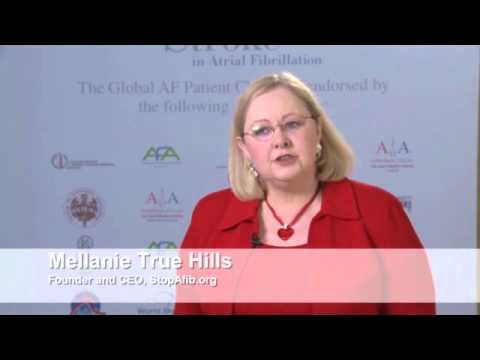
Today we have a roundup of Atrial Fibrillation Awareness Month stories for you: In her EP Lab DigestPatient Perspective column for this month, StopAfib.org founder Mellanie True Hills summarized the atrial fibrillation stroke prevention report produced by the Afib Optimal Treatment Task Force. There is a lot of great information for patients in this article. …
Some fascinating new research just reported in the Journal of the American College of Cardiology has shown that atrial fibrillation treatment success more than doubles when patients with medication-resistant high blood pressure [hypertension] and atrial fibrillation have a pulmonary vein isolation catheter ablation augmented by a kidney-related procedure called “renal artery denervation.” To learn more …
At Heart Rhythm 2012, Dr. James Reiffel gave us an update on new medications for treating atrial fibrillation, including the combination of low doses of ranolazine (Ranexa) and dronedarone (Multaq). He also talked about rate control vs. rhythm control for afib, and how the decision can vary by age and level of symptoms. Watch the …
The Atrial Fibrillation Optimal Treatment Task Force, led by the Alliance for Aging Research, has just released a consensus statement developed by a group of leading afib stroke prevention experts. We at StopAfib.org are proud to have been part of the development of this consensus statement, which recommends a process for assessing afib stroke and …
In this video interview recorded at Heart Rhythm 2012, Dr. Eric Prystowsky tackled the controversial topic of rate control vs. rhythm control for treating atrial fibrillation, and knowing whether you are symptomatic or asymptomatic. He also discussed the issues related to leaving afib patients on rate control long term, such as the buildup of fibrosis …